

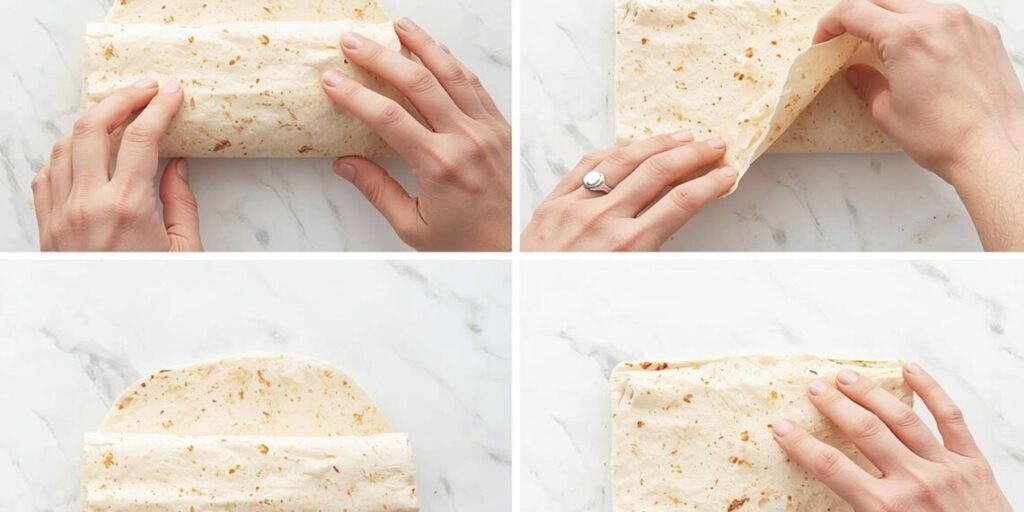
Learning how to fold a burrito properly transforms a potentially messy meal into a perfectly contained, handheld package. The technique involves warming your tortilla, placing filling in the lower center third, folding the bottom up over the filling, tucking in both sides tightly, and rolling forward while maintaining tension. This method, used in professional kitchens and taquerias worldwide, ensures your burrito stays intact from first bite to last.
Mastering how to fold a burrito is an essential kitchen skill that elevates home cooking and prevents the frustration of ingredients spilling onto your plate or lap. Whether you’re preparing lunch meal prep for the week or feeding a hungry family, proper burrito folding makes the difference between an enjoyable meal and a disappointing mess.
Why Proper Burrito Folding Matters
The structural integrity of a burrito depends entirely on folding technique. A poorly folded burrito falls apart after the first bite, wasting ingredients and creating unnecessary cleanup. Professional kitchens understand that knowing how to fold a burrito correctly maintains food quality, preserves temperature, and ensures customer satisfaction.
Beyond practicality, a well-folded burrito demonstrates culinary competence. The technique shows respect for ingredients and consideration for the eating experience. Mexican and Tex-Mex restaurants take pride in their folding methods, training staff extensively on this fundamental skill.
Home cooks who master how to fold a burrito gain confidence in preparing portable meals for work, school, or outdoor activities. The technique works for breakfast burritos, lunch wraps, and dinner options, making it one of the most versatile skills in any kitchen repertoire. Read More!
The Essential Foundation: Tortilla Selection and Preparation
Before learning how to fold a burrito, you must start with the right tortilla. Large flour tortillas, typically 10 to 12 inches in diameter, provide adequate surface area for proper folding. Smaller tortillas cannot accommodate sufficient filling while maintaining structural integrity.
Warming the tortilla is non-negotiable. Cold tortillas crack and tear during folding, immediately compromising your burrito. Heat your tortilla for 15-20 seconds per side on a dry skillet or directly over a gas flame until pliable and slightly steaming. The warmth makes the tortilla flexible and activates the natural starches that help it seal.
Some professional kitchens lightly steam tortillas instead of dry heating. This method adds moisture that enhances flexibility when learning how to fold a burrito. However, excessive moisture weakens the tortilla, so balance is critical. The goal is a warm, pliable tortilla that bends without breaking.
The Step-by-Step Folding Technique
Understanding how to fold a burrito starts with proper filling placement. Place your warm tortilla on a clean, flat surface. Add your filling in a horizontal line across the lower third of the tortilla, leaving approximately 2-3 inches from the bottom edge and 3 inches from each side. This positioning is crucial for successful folding.
Avoid overfilling, which is the most common mistake when learning how to fold a burrito. Use approximately ¾ to 1 cup of total filling for a standard 10-inch tortilla. More filling creates pressure that breaks through the tortilla during rolling. Think of the tortilla’s capacity realistically rather than optimistically.
The actual folding sequence follows four precise movements. First, fold the bottom edge of the tortilla up and over the filling, tucking it slightly under the filling’s far edge. This creates the initial seal. Second, fold both left and right sides inward, overlapping the filling by about 2 inches each. These side folds contain ingredients during the roll.
Third, while maintaining pressure on the side folds with your thumbs, use your fingers to roll the burrito forward and away from you. Keep consistent tension throughout the roll. This tension is what professionals emphasize when teaching how to fold a burrito. The fourth step is completing the roll until the seam faces downward, using the burrito’s weight to maintain closure.
Advanced Tips from Professional Kitchens
Professional cooks who excel at how to fold a burrito understand layering strategy. Place wet ingredients like salsa, sour cream, or guacamole in the center of your filling, surrounded by drier ingredients like rice, beans, and meat. This layering prevents moisture from weakening the tortilla during folding and eating.
Creating a “moisture barrier” with cheese or refried beans directly on the tortilla before adding other ingredients reinforces the structure. This technique, common in high-volume restaurants, provides additional insurance against tears and leaks when executing how to fold a burrito under pressure.
Temperature management affects folding success. All ingredients should be warm but not steaming hot when you fold. Excessive heat creates steam that softens the tortilla too much. Room temperature or slightly warm ingredients maintain optimal tortilla texture throughout the folding process.
Common Mistakes That Compromise Your Burrito
The most frequent error when learning how to fold a burrito is insufficient tortilla warming. A barely warm tortilla lacks the flexibility needed for tight folding. Take the extra 30 seconds to properly heat your tortilla. This small investment prevents the frustration of tears and cracks.
Overfilling ranks as the second most common mistake. Ambitious portions look appealing but create impossible folding conditions. When mastering how to fold a burrito, start with conservative filling amounts. You can always make a second burrito, but you cannot undo a torn tortilla.
Failing to maintain tension during rolling allows gaps where filling can escape. The rolling motion requires consistent pressure from your fingers while your thumbs secure the side folds. This coordination takes practice but becomes second nature after 10-15 attempts at how to fold a burrito correctly.
Placing filling too high on the tortilla leaves insufficient material for the bottom fold. The initial upward fold must completely cover the filling and tuck underneath. If your filling sits in the tortilla’s center, you won’t have enough tortilla to create this crucial first fold.
Troubleshooting Folding Problems
When your burrito tears during folding, immediately place a second warm tortilla underneath and continue rolling. This double-wrap technique salvages the meal and provides extra reinforcement. Many taco shops use this method for particularly heavy burritos, showing that understanding how to fold a burrito includes knowing recovery techniques.
If filling squeezes out the ends during rolling, you’ve likely overfilled or placed ingredients too close to the edges. For your next attempt at how to fold a burrito, reduce filling by about one-quarter and ensure proper edge clearance. The 2-3 inch margins are requirements, not suggestions.
Burritos that unroll immediately after folding indicate insufficient tension during rolling. Practice maintaining consistent pressure throughout the rolling motion. Some cooks find it helpful to roll the burrito on a cutting board, using the surface to help maintain compression.
Storage and Transport Considerations
Properly wrapped burritos maintain their structure during storage and reheating. After mastering how to fold a burrito, wrap it tightly in aluminum foil while still warm. The foil holds the shape and creates a slight steam effect that keeps the tortilla pliable.
For meal prep, individually wrap each burrito in plastic wrap followed by foil. This double wrapping prevents freezer burn and maintains quality for up to three months. When reheating frozen burritos, remove plastic wrap but keep the foil, heating in a 350°F oven for 25-30 minutes.
Room temperature burritos hold their shape better than refrigerated ones initially. However, for food safety, refrigerate burritos within two hours of preparation. The brief texture change is worthwhile compared to foodborne illness risks. Understanding how to fold a burrito includes respecting food safety protocols.
Cultural Context and Variations
Traditional Mexican burritos from northern states like Chihuahua typically contain fewer ingredients than American versions, making them easier to fold. The filling might simply be beans, meat, and chile, requiring less complex technique than overstuffed California-style burritos.
Mission-style burritos from San Francisco popularized the large-format burrito with rice, beans, meat, salsa, cheese, and sour cream. Mastering how to fold a burrito becomes essential with these ingredient-heavy versions. The technique developed in taquerias of the Mission District prioritizes tight rolling and strategic layering.
Breakfast burritos present unique folding challenges due to scrambled eggs, which compress differently than other proteins. When learning how to fold a burrito containing eggs, slightly reduce other filling amounts to compensate for eggs’ tendency to shift during rolling.
Practice Makes Perfect
Expect your first several attempts at how to fold a burrito to produce imperfect results. Professional line cooks practice this skill hundreds of times before achieving consistency. Home cooks should anticipate a learning curve of 10-20 burritos before developing confident technique.
Set up a practice session with just tortillas, beans, and rice to focus purely on folding mechanics without worrying about ingredient waste. This focused practice accelerates learning how to fold a burrito by removing pressure about expensive proteins or specialty ingredients.
Video recording your folding technique from above helps identify specific problems. Watching your hand positions and rolling motion reveals mistakes difficult to notice while concentrating on the task. This self-analysis shortens the learning curve for how to fold a burrito effectively.
The Practical Benefits of This Skill
Once you confidently know how to fold a burrito, meal preparation becomes more efficient. Batch-prepared burritos for the week take about the same time as cooking a single elaborate dinner. This time-saving aspect makes the skill valuable for busy professionals and families.
Portable, self-contained meals reduce reliance on expensive takeout and fast food. The money saved by preparing burritos at home accumulates significantly over months and years. Additionally, controlling ingredients means better nutrition than restaurant alternatives.
Sharing your expertise on how to fold a burrito with family members, especially children learning kitchen skills, creates teaching moments and family bonding. Kids as young as eight can learn basic burrito folding with supervision, giving them practical life skills and kitchen confidence.
Frequently Asked Questions
What size tortilla is best for folding burritos?
The ideal tortilla for folding burritos measures 10 to 12 inches in diameter. This size provides enough surface area to properly contain fillings while folding. Flour tortillas work better than corn for large burritos because they’re more flexible and less likely to crack during the folding process.
Why does my burrito keep falling apart?
Burritos fall apart due to overfilling, insufficient tortilla warming, or inadequate rolling tension. Reduce your filling amount by one-quarter, ensure your tortilla is warm and pliable, and maintain consistent pressure while rolling. These three adjustments solve most structural problems.
Can I fold a burrito ahead of time?
Yes, you can fold burritos several hours or even days ahead. Wrap them tightly in foil or plastic wrap immediately after folding to maintain structure. Refrigerated burritos stay fresh for 3-4 days, while frozen ones last up to three months. Always reheat thoroughly before eating.
How much filling should I use in a burrito?
Use approximately ¾ to 1 cup of total filling for a 10-inch tortilla. This amount allows proper folding without overstressing the tortilla. Distribute filling in a horizontal line across the lower third of the tortilla, leaving 2-3 inches from the bottom and sides.
What’s the best way to reheat a folded burrito?
For best results, wrap your burrito in foil and heat in a 350°F oven for 15-20 minutes if refrigerated, or 25-30 minutes if frozen. Alternatively, microwave for 1-2 minutes for refrigerated burritos, though this method produces a softer tortilla. The oven method maintains better texture.
Do I need to secure my burrito with anything after folding?
A properly folded burrito shouldn’t need toothpicks or other fasteners. The seam-side-down position and natural starch in the tortilla provide adequate hold. However, wrapping in foil immediately after folding reinforces structure and makes transport easier.
Can I use this technique for other wraps and rolls?
Yes, this folding technique works for various wraps, including breakfast wraps, lunch wraps, and even some types of spring rolls. The fundamental principles of proper filling placement, side folding, and tension-maintained rolling apply across different wrapper types and cuisines.